Dry-Mixed Mortar Buyer Guide: Types, Selection Criteria and Supplier Checks
<h2>What dry-mixed mortar is, and why the category matters at the buying stage</h2>
<p>Dry-mixed mortar is a factory-blended powder — binder, aggregate and additives — delivered dry and mixed with water on site. It is a category, not a single product. Tile adhesive, waterproof mortar, thermal insulation mortar, insulation-board bonding mortar and dry-pack floor mortar are all dry-mixed mortars, but they solve different problems and are specified, applied and inspected differently.</p>
<p>That matters because most procurement mistakes happen at the category level: a buyer compares quotes for "mortar" when one supplier is pricing a thin-bed tile adhesive and another a thick-bed leveling mortar. Before comparing anything, fix the product function, the substrate, and the service conditions. The rest of this guide walks through those decisions in the order a buyer usually faces them.</p>
<h2>Map the mortar to the job before you map it to a price</h2>
<p>Start with the function the mortar must perform, then the substrate, then the exposure. A simple functional map looks like this:</p>
<table>
<thead>
<tr>
<th>Mortar type</th>
<th>Primary job</th>
<th>Typical substrates or interfaces</th>
<th>What the buyer should pin down</th>
</tr>
</thead>
<tbody>
<tr>
<td>Tile adhesive</td>
<td>Bond tiles to a prepared substrate</td>
<td>Concrete, masonry, screeds, existing tile (subject to system approval)</td>
<td>Classification and performance class, open time, substrate preparation, tile type and size</td>
</tr>
<tr>
<td>Waterproof mortar</td>
<td>Resist water penetration in wet or damp zones</td>
<td>Concrete and masonry walls and floors, balconies, wet rooms</td>
<td>Waterproofing mechanism, crack-bridging behaviour, layer thickness, protection layer</td>
</tr>
<tr>
<td>Thermal insulation mortar</td>
<td>Provide a insulating layer, often on walls or roofs</td>
<td>Masonry and concrete walls, roof decks, fire barrier zones</td>
<td>Declared thermal conductivity and density, layer thickness, fire behaviour, finish compatibility</td>
</tr>
<tr>
<td>Insulation-board bonding mortar</td>
<td>Fix insulation boards to an exterior-wall substrate</td>
<td>Polystyrene boards, rock wool boards, prepared exterior walls</td>
<td>Board type compatibility, adhesion test data, coverage method (dot-and-dab or full-bed)</td>
</tr>
<tr>
<td>Dry-pack floor mortar</td>
<td>Level and support large-format floor tiles</td>
<td>Floor slabs and screeds</td>
<td>Moisture level of the mix, flatness tolerance, tile size and thickness</td>
</tr>
</tbody>
</table>
<p>Two cautions. First, a product that appears in two rows is not automatically interchangeable between them; a bonding mortar for insulation boards is not a tile adhesive. Second, the substrate is part of the specification. The same mortar can pass on a sound, primed concrete wall and fail on a dusty, friable or contaminated surface.</p>
<h2>Selection criteria that actually change the outcome</h2>
<h3>1. Declared performance class, not just product name</h3>
<p>For tile adhesives, ask for the declared classification and the test standard behind it. A product name such as "standard adhesive" tells you little; a declared class plus the test report tells you what the supplier is willing to stand behind. If the supplier cannot state the class and the standard, treat the product as unspecified.</p>
<h3>2. Substrate and environment compatibility</h3>
<p>List the substrates on the project, including the awkward ones: old tile, lightweight block, painted surfaces, heated screeds, and areas subject to movement. Then ask which products the supplier explicitly approves for each. "Suitable for most substrates" is not an answer you can design against.</p>
<h3>3. Thermal and fire requirements for insulation mortars</h3>
<p>For thermal insulation mortar, the declared thermal conductivity and density drive the thickness needed to reach a target thermal resistance. Ask for the declared values, the test method, and the thickness range over which they apply. For fire barrier zones, ask for the fire-performance evidence that applies to the specific assembly, not just the mortar in isolation.</p>
<h3>4. Waterproofing mechanism and detailing</h3>
<p>Waterproof mortars differ in how they resist water — for example, by reducing permeability or by forming a flexible coating. The mechanism determines how corners, pipe penetrations and movement joints must be detailed. Ask for the supplier's detail drawings and the minimum and maximum layer thickness.</p>
<h3>5. Application method and site capability</h3>
<p>Thin-bed, thick-bed, dry-pack and spray-applied methods need different crew skills and equipment. A mortar that requires a method your crew does not use is a false economy. Confirm the intended method, mixing ratio, pot life and working time in writing.</p>
<h2>Specification questions to send before you request a quotation</h2>
<p>A short written request narrows the field quickly and makes quotes comparable. Ask every candidate supplier the same questions:</p>
<ul>
<li>What is the exact product designation, and which standard or classification does it claim?</li>
<li>Which substrates and tile or board types is it approved for, and which are excluded?</li>
<li>What are the declared performance values (adhesion, thermal conductivity, density, watertightness as applicable), and what test method produced them?</li>
<li>What mixing ratio, pot life, open time and coverage should the site plan for?</li>
<li>What substrate preparation and primers are required?</li>
<li>What is the packaging format, and how should pallets be stored and stacked?</li>
<li>Can you supply a current technical data sheet and safety data sheet in the project language?</li>
<li>What batch traceability is printed on the bag?</li>
</ul>
<p>Answers that are specific, consistent across documents and traceable to a test report are a better signal than polished marketing copy. Inconsistency between the data sheet, the bag and the sales email is a warning sign worth investigating before you place an order.</p>
<h2>How to validate a supplier and a sample</h2>
<p>Product data tells you what the supplier claims; validation tells you whether the claim survives contact with your project. A practical sequence:</p>
<ol>
<li><strong>Document check.</strong> Compare the technical data sheet, safety data sheet and declaration of performance for the same product code. Check dates and revision numbers.</li>
<li><strong>Sample trial.</strong> Apply the mortar on the actual substrate with the actual crew, at the specified thickness. Record mixing water, temperature, working time and any surface defects.</li>
<li><strong>Adhesion or bond check.</strong> Where the project allows, carry out pull-off or bond testing on the trial area and record the values and failure mode.</li>
<li><strong>Batch consistency.</strong> Compare a second batch with the first. Variation in colour, flow or setting behaviour may indicate process control issues.</li>
<li><strong>Paperwork for the order.</strong> Confirm product code, quantity, packaging, batch marking and delivery documentation in the purchase order, not just in the quotation.</li>
</ol>
<p>Keep the trial records. If a dispute arises later, a dated trial result on the actual substrate is far more useful than a brochure.</p>
<h2>Warning signs in a dry-mixed mortar offer</h2>
<ul>
<li><strong>One product for every job.</strong> A supplier who offers the same mortar for tile fixing, waterproofing and insulation is either misunderstanding the request or oversimplifying the range.</li>
<li><strong>No declared class or standard.</strong> Performance language without a classification or test method cannot be verified.</li>
<li><strong>Missing or contradictory data sheets.</strong> Different values for the same product across documents suggest weak document control.</li>
<li><strong>Vague substrate approval.</strong> If the supplier will not state exclusions, assume the approval is narrow.</li>
<li><strong>No batch traceability.</strong> Without batch marking you cannot link a failure back to production.</li>
<li><strong>Pressure to skip the trial.</strong> A sample trial is cheap compared with rework.</li>
</ul>
<h2>Where the product range fits</h2>
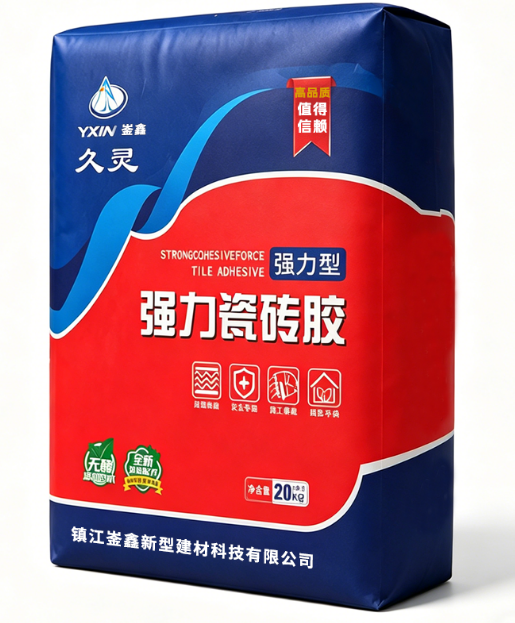
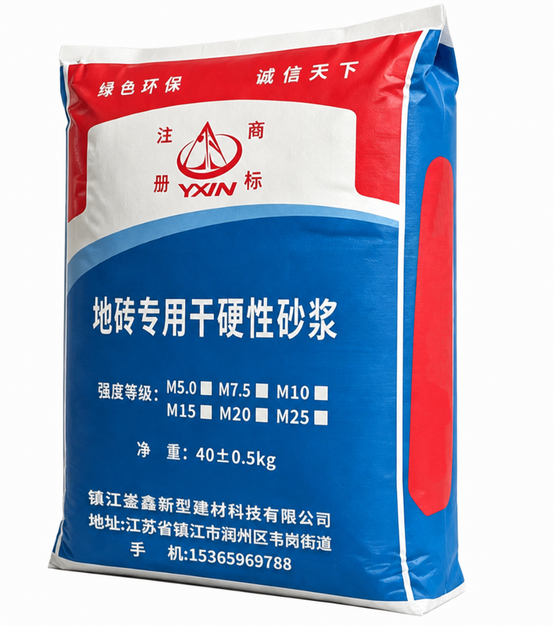
<p>Zhenjiang Yinxin New Building Materials Technology Co., Ltd. (崟鑫) manufactures premixed mortar, special mortar, tile adhesive and lightweight partition panels. Its dry-mixed mortar range includes an inorganic lightweight aggregate thermal insulation mortar for interior and exterior wall insulation, roof insulation and fire barrier zones; a bonding mortar for fixing polystyrene and rock wool insulation boards to exterior-wall substrates; and a dry-pack mortar for leveling and supporting large-format floor tiles. Buyers evaluating these products should still apply the questions and trial steps above, and confirm the declared values and substrate approvals in writing for the specific project.</p>
<h2>Next actions for a procurement team</h2>
<p>Turn the functional map into a short specification: one line per mortar type, with substrate, exposure, declared class and application method. Send it to two or three suppliers with the question list above. Shortlist on document quality and answer consistency, then validate the leading product on site before committing to volume. That sequence costs little and removes most of the risk that sits between a quotation and a finished wall.</p>